Pre‑Production: Where the Budget Test Has to Start
Script breakdowns, boards, and schedules are where AI has to prove it changes the maths, not just the marketing.
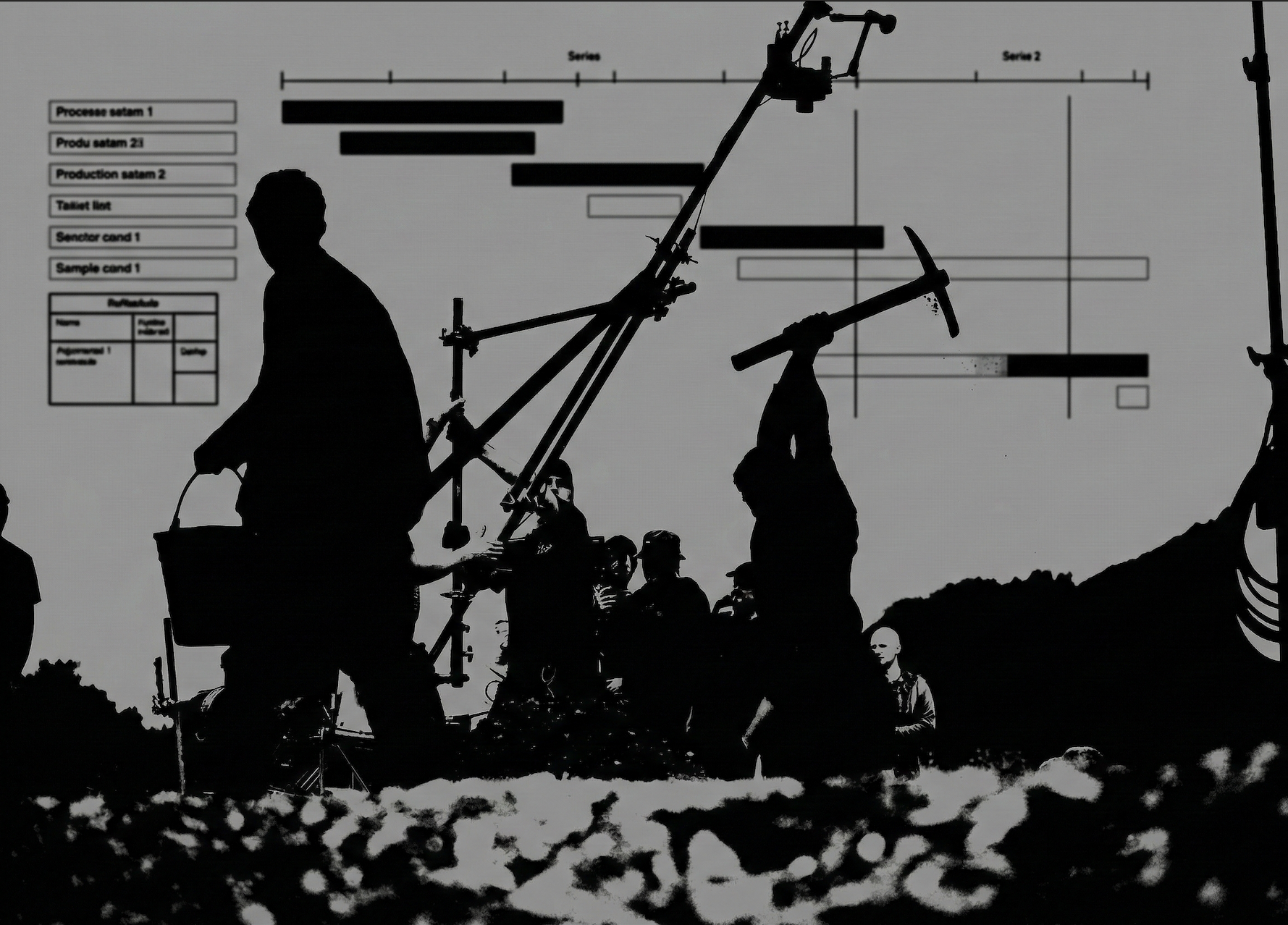
Pre-Production, Contingency, and Where AI Should Show Up First
On most productions there is a week in the schedule that nobody quite talks about.
It often appears under different labels: contingency, buffer, additional prep, or simply extra days between milestones. Everyone involved understands why it is there. A script might change later than expected. A location might fall through. A key creative decision might take longer than anyone predicted.
The week exists because uncertainty exists.
In project management theory, this kind of time is not considered waste. It is a risk buffer, a deliberate allowance for the unknowns that inevitably appear when complex work is planned in advance. Large infrastructure projects carry cost contingency. Software development carries schedule buffers. Aerospace programs maintain management reserves.
Film production has evolved its own version of the same mechanism: contingency embedded directly into the schedule.
The presence of these buffers does not mean a production is inefficient. In most cases it means the opposite. It is the industry’s way of absorbing uncertainty in a field where creative decisions, logistics, weather, and financing often collide.
But contingency has another effect. Because it sits quietly inside the schedule, it also becomes a hidden driver of production economics. The amount of contingency a production carries tells us something about how much uncertainty the system expects to encounter.
And that is where the current conversation about artificial intelligence becomes interesting.
A Producer Building Under Constraint
While much of the film industry debates how AI might change workflows, one of its most successful producers continues to emphasise something more basic: discipline in budgets.
When Jason Blum received the Producers Guild Milestone Award, he spoke openly about wanting to maintain a pipeline of very low-budget films—even projects under one million dollars. For Blumhouse, modest budgets and back-end participation are not side experiments but the core of the model. The constraint itself becomes the engine that makes the system work.
This approach stands in contrast to a broader trend in the industry. In recent years the global slate has shifted toward fewer, larger projects, with increasing budgets concentrated in franchise films and major streaming productions.
In that environment, the Blumhouse strategy highlights an important principle: discipline in pre-production often determines whether a film can be made at all.
The question raised by the current wave of AI tools is whether they can support that kind of discipline—or whether they simply add another layer of software on top of existing processes.
What AI Vendors Promise in Pre-Production
Most AI tools targeting film production focus on pre-production.
The pitch is straightforward. Script breakdowns that once took hours can be generated in minutes. Scheduling tools can reorganize entire shooting calendars automatically. Assistants can produce shot lists, mood boards, or location suggestions on demand.
Consultancy reports often echo similar expectations. Several analyses suggest AI could reduce production costs by several percent by catching problems earlier, reducing rework, and accelerating planning processes. On paper the numbers look promising. Even a five-percent improvement on a large production represents millions of dollars.
But there is a practical question hidden beneath those claims.
Where exactly do those savings appear?
Film productions do not measure efficiency in abstract terms like “hours saved.” They measure it in schedules, budgets, and contingency. If a process becomes faster, the effect should eventually appear somewhere in those structures.
That simple observation forms the basis of what I call the Budget Test.
The Budget Test
The Budget Test is a straightforward question:
If a new tool truly improves efficiency in production workflows, where does that efficiency appear in the budget or schedule?
In practice, the answer can only show up in a few places.
A production might shorten its prep period. It might reduce contingency days. It might lower administrative overhead or coordination costs.
But if none of those change if schedules remain the same length, contingency remains the same size, and budgets remain unchanged—then the technology may be improving the experience of work without altering the economics of production.
This distinction matters because filmmaking operates under tight financial constraints. Efficiency that cannot be translated into economic outcomes is difficult to sustain over time.
Where Time Actually Disappears in Pre-Production
To understand where AI might have an impact, it helps to look at where pre-production actually loses time.
On many productions the largest delays do not come from documentation tasks like tagging scripts or preparing reports. They come from decision latency—the time it takes for creative teams and stakeholders to converge on a stable plan.
Scripts continue to evolve after budgets have been drafted. Locations are reconsidered once practical constraints appear. Departments work from slightly different versions of the same information while approvals move through multiple layers of communication.
Each individual change may seem minor, but together they create uncertainty. And uncertainty leads directly to contingency.
When a production does not know exactly how long decisions will take, it adds buffer days to protect the schedule. Those buffers accumulate quietly, shaping the final economics of the project.
This dynamic suggests that the most important question for AI tools is not how quickly they produce documents, but whether they reduce the underlying uncertainty that drives contingency in the first place.
The Discipline of the Micro-Budget Model
Some filmmakers operate under constraints that make contingency impossible.
Micro-budget producers often design projects with a limited number of locations, tightly controlled schedules, and scripts that can realistically be executed within those boundaries. In interviews, many describe a similar process: extensive preparation, early script lock, and clear decisions about what the film will and will not attempt.
In these cases the budget itself enforces discipline. There is simply no room for extended buffers.
From an economic perspective, these productions provide a useful comparison. They demonstrate that pre-production discipline alone—without new technology—can significantly shape the cost structure of a film.
This raises a natural question for the AI era: can new tools support that kind of discipline at a broader scale?
Testing AI in Pre-Production
If AI is going to change production economics, pre-production is the most logical place to observe it.
One way to evaluate this is through small, measurable experiments. A sequence, an episode, or a defined prep block can be planned using traditional workflows, documenting how long each step takes and how many revisions occur.
The same material can then be run through an AI-assisted process, using automated breakdowns, scheduling tools, or location analysis systems. The key is not simply to measure speed but to observe whether the process produces more stable plans, fewer revisions, or clearer decisions.
Only then can we ask the question that matters:
Did the AI-assisted process remove real time from the schedule? Did it reduce uncertainty enough to shrink contingency? Could a producer reasonably shorten the prep period on the next project based on what was learned?
Without those measurements, claims about efficiency remain difficult to verify.
A Structural Challenge for the Film Industry
Film production also faces a structural challenge that makes these questions harder to answer.
Unlike many industries, filmmaking rarely operates through permanent organizations. Each project assembles a temporary network of freelancers, works intensively for a short period, and then dissolves again.
This structure has advantages. It allows productions to scale quickly and bring together specialized talent. But it also means operational knowledge resets frequently. Tools spread unevenly, and new workflows depend largely on individuals adopting them rather than organizations enforcing them.
As a result, technological change in filmmaking tends to move through the industry person by person rather than company by company.
That dynamic may explain why many digital tools have improved workflows without dramatically altering production economics.
Can AI Reduce Contingency?
Seen from this perspective, the real question for AI is surprisingly simple.
If these tools genuinely improve planning and coordination, they should gradually reduce the uncertainty that drives contingency. Schedules might become slightly shorter. Buffers might become smaller. Decisions might arrive earlier.
If that happens, the change will appear in the numbers.
If it does not, then AI may still be valuable—but its effect will be more limited. It will make production paperwork faster and more flexible without necessarily changing the underlying economics of filmmaking.
The Real Opportunity
For smaller productions and independent filmmakers, the stakes of this question are significant.
The global production slate has narrowed in recent years, with financing concentrating around fewer large projects. In that environment, tools that reduce uncertainty could help producers take risks on films that might otherwise remain unmade.
Even modest improvements—clearer breakdowns, more reliable schedules, or better coordination between departments—could make it easier to greenlight projects that sit near the edge of financial viability.
But that outcome depends on whether the efficiency created by AI becomes visible in the structure of production itself.
Looking Ahead
The Budget Test series is built around a simple principle.
When new tools promise efficiency, the effect should eventually appear in the economics of the work. If artificial intelligence is truly transforming film production, we should see it first in the places where budgets are most sensitive: pre-production schedules, contingency buffers, and planning overhead.
If those structures remain unchanged, then the technology may still be useful—but the transformation will be smaller than many predictions suggest.
In the next essays, I will continue examining where AI tools interact with the practical mechanics of filmmaking: where they reduce uncertainty, where they simply move work around, and where they quietly reshape the roles that production teams rely on.
Because in an industry built on tight margins and temporary organizations, efficiency only matters when it becomes visible in the numbers.